Latest Blog
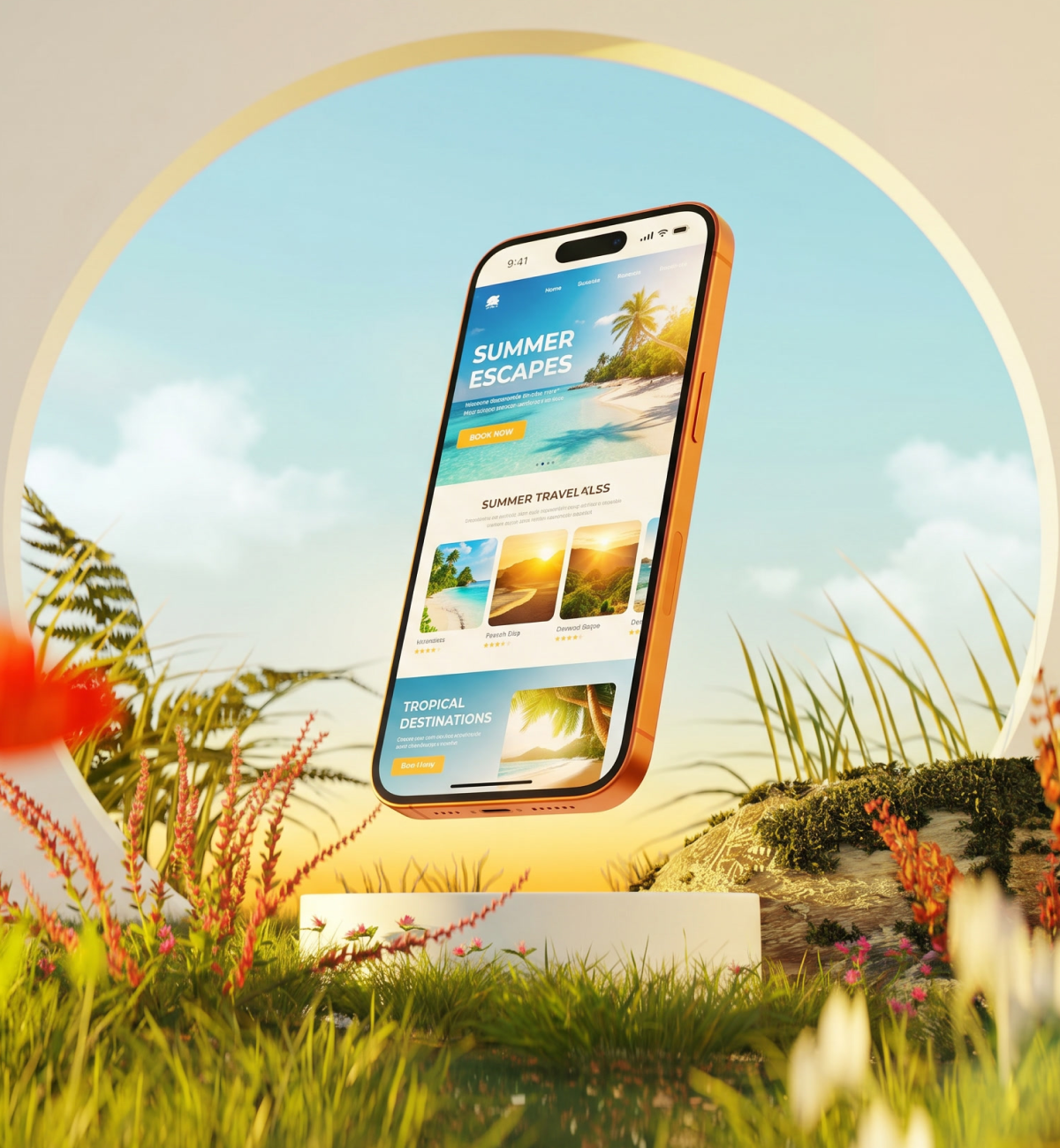


Summer doesn’t just change the weather — it changes how people think, browse, and buy.
Attention spans shrink, decisions speed up, and users spend more time on mobile, often scrolling in between plans, trips, or moments of downtime. That shift creates a very specific challenge for brands: your landing page has to feel lighter, faster, and more intuitive — while still doing the heavy lifting of conversion.
In 2026, the most effective summer landing pages don’t try too hard. They guide, not push. They feel effortless, but are carefully designed underneath.
It’s tempting to focus on “summer style” — brighter colors, beach photos, sunny vibes. But the real impact comes from understanding summer behaviour.
Users are more impulsive. They don’t want to compare ten options or read long explanations. They want quick answers and clear value. That’s why high-performing landing page design today is built around speed of decision.
Shorter paths, fewer steps, cleaner structure — all of this directly affects conversion optimization. The faster a user understands what they get, the more likely they are to act.
Yes, summer calls for color — but not chaos.
Design trends in 2026 lean toward richer, warmer palettes: soft yellows, coral accents, fresh greens, sky blues. These shades create energy and emotion, especially when used intentionally around key elements like CTAs or offers.
At the same time, the layout itself should stay calm. Plenty of white space, clear hierarchy, and minimal distractions allow those colors to actually work. Without that balance, even the best visuals start to feel heavy.
And imagery matters more than ever. Real, slightly imperfect, human moments outperform overly polished stock photos. A relaxed terrace, a spontaneous trip, a quiet outdoor moment — these scenes create connection faster than any headline.
When everything competes for attention, nothing wins.
That’s why strong landing pages still follow a simple rule: one page, one goal. A single, clearly defined CTA removes hesitation and gives users a sense of direction.
In summer campaigns, that action should feel easy and immediate:
“Book now”
“Get the offer”
“Start today”
Not pushy — just obvious.
From a UX perspective, this reduces cognitive load. From a business perspective, it drives conversions. And when paired with strong visual contrast and placement, that one button becomes the anchor of the entire page.
Summer browsing happens on the move — literally.
People scroll while traveling, walking, sitting outside, or switching between apps. That makes responsive web design not just important, but critical.
A high-performing landing page in 2026 is designed for mobile first, not adapted later. That means:
If a page feels slow, cluttered, or awkward on mobile, it loses attention instantly. And in summer, attention is already limited.
Interactivity has evolved. It’s no longer about adding effects — it’s about creating flow.
Subtle motion, micro-interactions, and scroll-based transitions help users move through the page naturally. A button that responds gently. A section that reveals itself as you scroll. A visual shift that signals progress.
These details may seem small, but they change how a page feels. Instead of static and flat, it becomes responsive and alive.
In modern UI/UX design, this kind of motion isn’t decoration — it’s navigation.
The best landing pages today don’t just present information. They unfold it.
Especially in summer, when users are more open to exploration but less willing to commit instantly, storytelling becomes a powerful tool. Instead of overwhelming visitors with everything at once, the page leads them step by step.
First — the mood.
Then — the value.
Then — the proof.
Finally — the action.
This approach works particularly well in industries like travel, e-commerce, hospitality, and lifestyle services, where emotion plays a key role in decision-making.
Even the most beautiful landing page fails if it’s slow.
Speed, stability, and technical performance remain at the core of effective web development. Especially on mobile networks, where delays are more noticeable, performance directly impacts engagement and conversions.
Fast pages feel effortless.
Effortless pages feel trustworthy.
And trust is what drives action.
Summer isn’t the time for complicated messaging.
The tone should be light, clear, and confident — without sounding generic. Users don’t want to decode clever headlines. They want to understand the value instantly.
Strong landing page copy answers three questions right away:
What is this?
Why should I care?
What should I do next?
When those answers feel obvious, conversion becomes much easier.
From an SEO perspective, this is also where keywords like landing page design, responsive web design, website development, and conversion optimization should appear naturally — supporting visibility without breaking the flow.
Everything starts with the first impression.
The hero section isn’t just a visual — it’s a decision point. In a matter of seconds, users decide whether to stay or leave.
A strong first screen combines:
When all four work together, the page doesn’t need to convince — it simply continues the conversation.
Summer landing page design in 2026 is less about decoration and more about alignment — with behaviour, mood, and context.
It’s about creating pages that feel light, fast, and natural to use, while quietly guiding users toward action.
Because in summer, people don’t want to be pushed into decisions.
They want to arrive at them easily.